Late September was supposed to be one of the sweetest windows for visiting Italy — warm sea, thinner crowds, harvest season in full swing. Instead, travelers heading to Italy destinations this week are contending with a familiar seasonal double act: nature and labor action. Mount Etna has once again dusted Catania’s runways with volcanic ash, while a nationwide maritime strike and a fresh round of transport strikes are converging on the calendar. For anyone planning a trip built around Sicily, Tuscany, and Rome, a little strategic flexibility goes a long way right now.
Etna’s Ash Cloud and the Catania Bottleneck
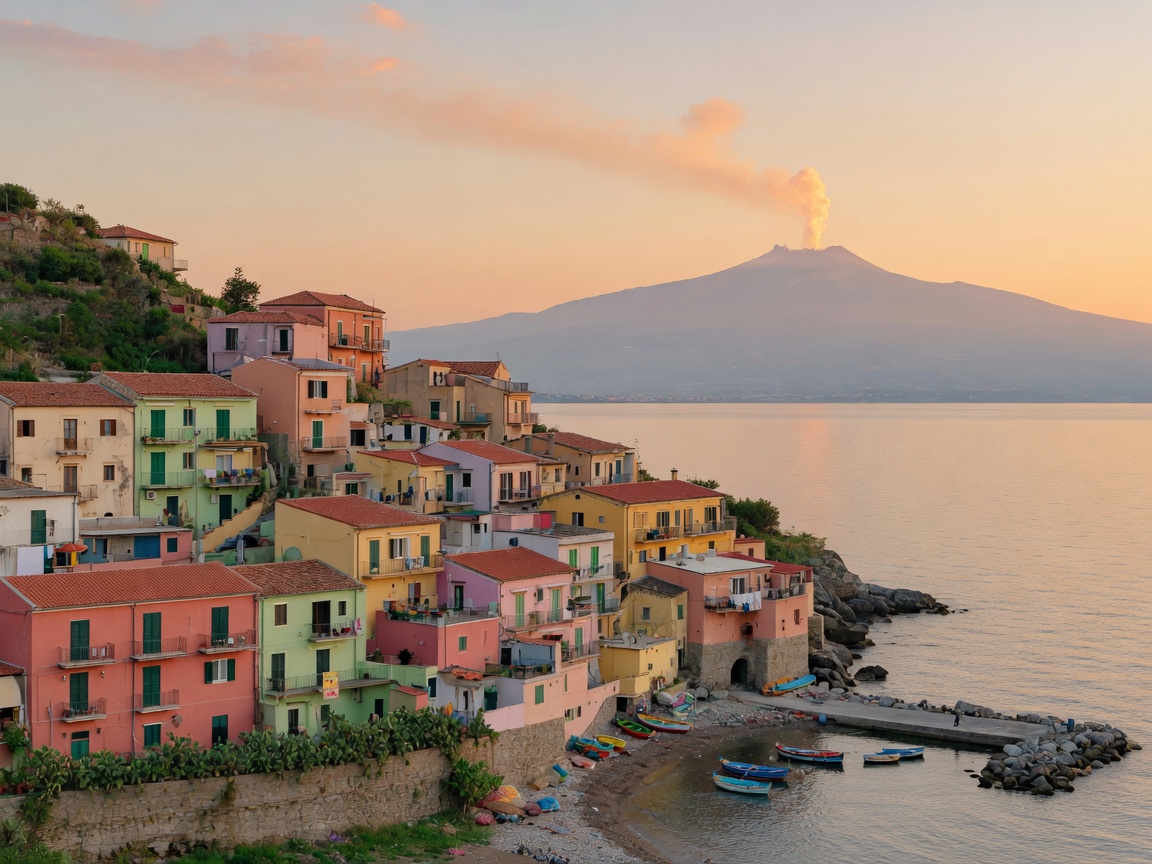
Catania-Fontanarossa, Sicily’s busiest airport and the main gateway to the island’s eastern coast, suspended flights repeatedly on 26 and 27 September because of ash emissions from Mount Etna. This is not a new phenomenon — Etna is one of Europe’s most active volcanoes, and Catania’s proximity to it means periodic closures are simply part of flying into eastern Sicily. What makes this round notable is timing: it lands squarely in the shoulder season when demand for Sicily is near its annual peak, with visitors drawn to Taormina, the Baroque towns of the Val di Noto, and Etna’s own vineyards.
The practical takeaway for anyone booking now: build in a buffer day around Catania arrivals or departures, and consider Palermo as an alternate gateway if your itinerary allows flexibility on the western side of the island. Comiso Airport, in the island’s southeast, is another underused option worth checking for smaller carriers.
Strikes Stack Up: Ports, Planes, and Local Disruption
Beyond the volcano, Italy’s transport calendar is crowded. A nationwide maritime strike is set for 28 September, threatening delays and cancellations at ports and on ferry routes — a real concern for anyone connecting to Sicily, Sardinia, or the smaller islands by sea rather than air. Just two days later, on 30 September, a broader wave of strikes hits air transport nationwide, with additional local disruption reported in Rome and Tuscany.
For travelers moving between Rome, Tuscany, and coastal towns, this stacked sequence of strikes means the final days of September carry real logistical risk across multiple transport modes simultaneously — air, sea, and local ground transit. It’s worth noting that Italian strikes typically guarantee minimum service on certain routes and times, but “minimum” often means significantly reduced schedules, not full continuity.
A few practical safeguards:
- Check your airline’s and ferry operator’s strike advisories 48-72 hours ahead of travel dates.
- Avoid scheduling tight connections through Rome Fiumicino or Ciampino on or around 30 September.
- If heading to Sicily by ferry from mainland ports, have a backup flight option in mind for 28 September.
- Regional trains in Tuscany may run reduced schedules; confirm with Trenitalia or Trenord before day trips.
Turning Disruption Into an Opportunity for Hidden Gems
Here’s the silver lining: disruption around major hubs is often the best argument for the kind of regional travel and hidden gems Italy is famous for. If Catania is grounded or a ferry is cancelled, this is the moment to lean into inland Sicily — the sulphur-mining town of Caltanissetta, the mosaic-rich cathedral at Monreale near Palermo, or the quiet beaches around Marzamemi in the island’s southeastern corner, far from the main tourist circuits.
The same logic applies in Tuscany, where strike-related delays on the coast can be an invitation to slow down in the Maremma — Pitigliano’s tufa-stone alleys, or the thermal baths near Saturnia — rather than rushing between Florence and the sea. And in Rome, a disrupted transit day is a reasonable excuse to stay local: explore Trastevere on foot, or take a regional train (when running) to Ostia Antica instead of fighting airport traffic.
It’s also worth keeping the U.S. State Department’s Level 2 travel advisory for Italy in mind — a routine caution level shared with much of Western Europe, flagging awareness around crowded tourist sites and transit hubs rather than signaling any acute crisis. Practically, it simply reinforces good habits: watch your belongings in stations and squares, and keep digital copies of documents and bookings handy when schedules shift suddenly.
What This Means for Your Next Italy Trip
None of this makes Italy less worth visiting — it makes flexible planning more essential. Late September and early October remain some of the best weeks for weather, wine harvests, and lighter crowds across Sicily, Tuscany, and the Roman countryside. The current disruptions are a reminder to build slack into itineraries, diversify transport options, and treat delays as detours toward quieter corners rather than pure inconvenience.
Key takeaway: Etna’s ash and this week’s strikes are a timely nudge to travel Italy with a plan B — and often, that plan B leads straight to the hidden gems worth the trip in the first place.