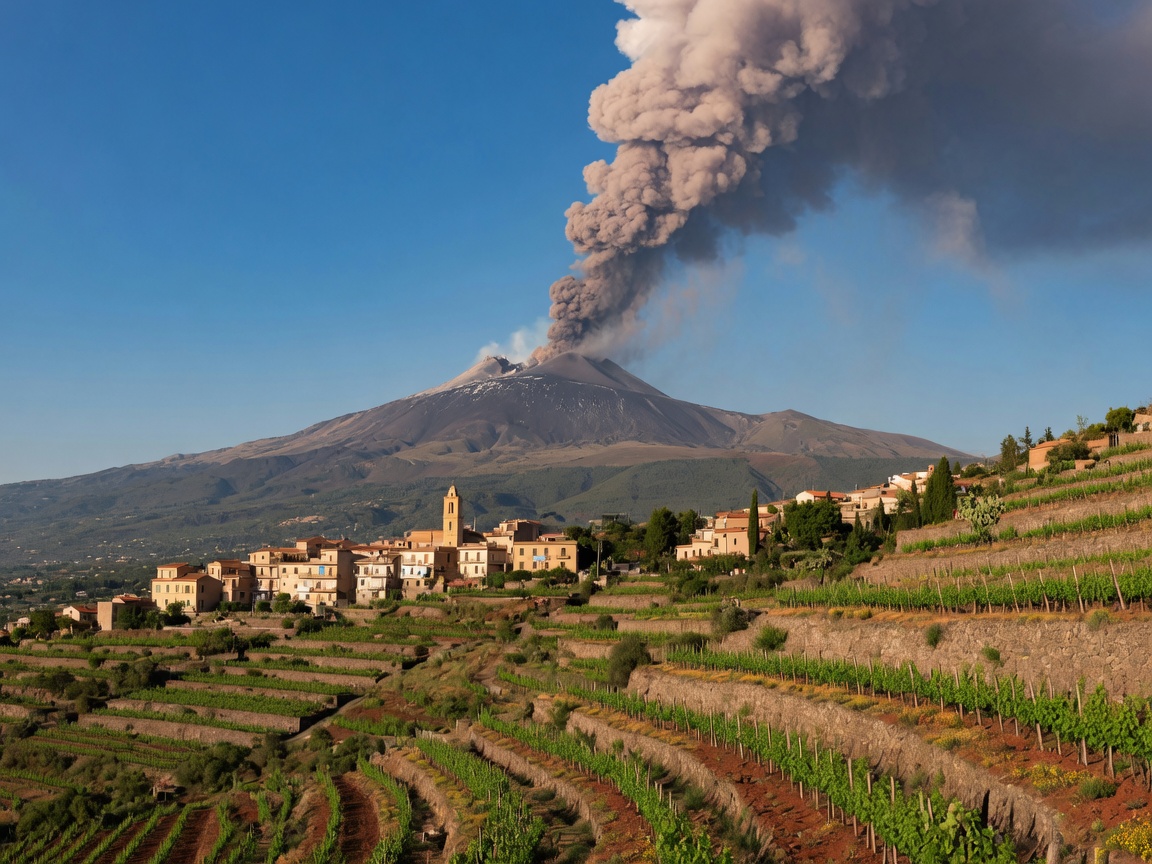
Mount Etna has done it again. A fresh eruption from Europe’s most active volcano has sent ash plumes drifting across eastern Sicily, forcing the closure of Catania-Fontanarossa Airport and scrambling travel plans across the island. For anyone with a Sicily itinerary this week, it’s a reminder that this corner of the Mediterranean is as dramatic in its geology as it is in its cuisine — and that flexibility is the real travel currency here.
But the disruption isn’t only about one airport. It’s surfacing a broader conversation happening in Italy travel circles right now: how to move confidently around a country where volcanic ash, rail interruptions, and overtourism-driven congestion can all reshape a trip in the space of a single morning.
Sicily’s Beauty Comes With a Rhythm of Its Own
Etna isn’t a distant backdrop for Sicily — it’s practically a neighbor to Catania, Taormina, and the vineyards of the Etna DOC wine region. Ash closures at Fontanarossa are not rare; they happen periodically when the volcano is active, and this latest eruption is simply the newest chapter. For travelers, the practical takeaway is straightforward: build buffer days into Sicily itineraries, especially around Catania, and keep an eye on alternate gateways like Palermo’s Falcone-Borsellino Airport, which sits far enough west to typically remain unaffected.
This is also a moment to appreciate Sicily beyond the eruption headlines. The island’s inland towns — Modica with its chocolate tradition, the baroque hill town of Noto, or the quiet fishing village of Marzamemi — offer a version of Sicily that doesn’t depend on flight schedules at all. If Catania is grounded, the Val di Noto and the southeastern coast remain very much open for exploring.
Rail Disruptions Are the Quiet Undercurrent of Italian Travel
While Etna grabs headlines, Italy’s rail network has had its own hiccups. A disruption on the Naples–Villa Literno line on 26 August is a small but telling example of how regional train interruptions continue to affect domestic mobility. For travelers stitching together multi-city itineraries — say, Naples to Rome to Florence — these interruptions matter more than they might seem.
The practical lesson: when planning regional travel across Italy, treat train times as flexible rather than fixed, particularly during peak summer months when maintenance work, heat-related slowdowns, and occasional strikes converge. Building in a half-day cushion between major legs of a trip — especially around Rome and Tuscany, where local transport limits and congestion are already a known summer challenge — can be the difference between a smooth journey and a stressful scramble.
The Bigger Shift: Hidden Gems Over Crowded Icons
Perhaps the most interesting trend running alongside these disruptions is where travelers are choosing to go in the first place. International travel coverage has been steadily nudging visitors away from the most congested Italian icons — Venice’s Grand Canal, Florence’s Uffizi queues, Rome’s Trevi Fountain crowds — toward quieter alternatives.
This isn’t just a reaction to overtourism; it’s a genuine rediscovery of regional Italy. Some places worth considering instead of the usual circuit:
- Le Marche — a coastal and hill-town region east of Tuscany, with fewer crowds and equally stunning countryside
- The Cilento Coast south of Naples — dramatic cliffs and beaches without the Amalfi Coast price tag or traffic
- Ortigia, the old island quarter of Syracuse in Sicily — a baroque, seaside alternative to Taormina
- Val d’Orcia towns like Pienza — Tuscany’s quieter answer to San Gimignano’s crowds
These destinations offer the same regional character — the food, the light, the pace — with a fraction of the logistical stress that comes with peak-season icons.
What This Means for Trip Planning
The common thread across Etna’s ash cloud, rail hiccups, and overtourism fatigue is simple: Italy rewards travelers who plan with flexibility rather than rigid precision. Booking refundable transport when possible, choosing regional bases with multiple onward options, and leaning into lesser-known coastal towns and inland villages all reduce the risk of disruption ruining a trip.
Key takeaway: Sicily remains an extraordinary destination, Etna eruptions and all — but the smartest travelers this season are the ones treating Italy as a network of regional possibilities rather than a fixed checklist of famous stops. When one door closes, whether it’s an airport or an overcrowded piazza, Italy’s countryside almost always offers another way in.